
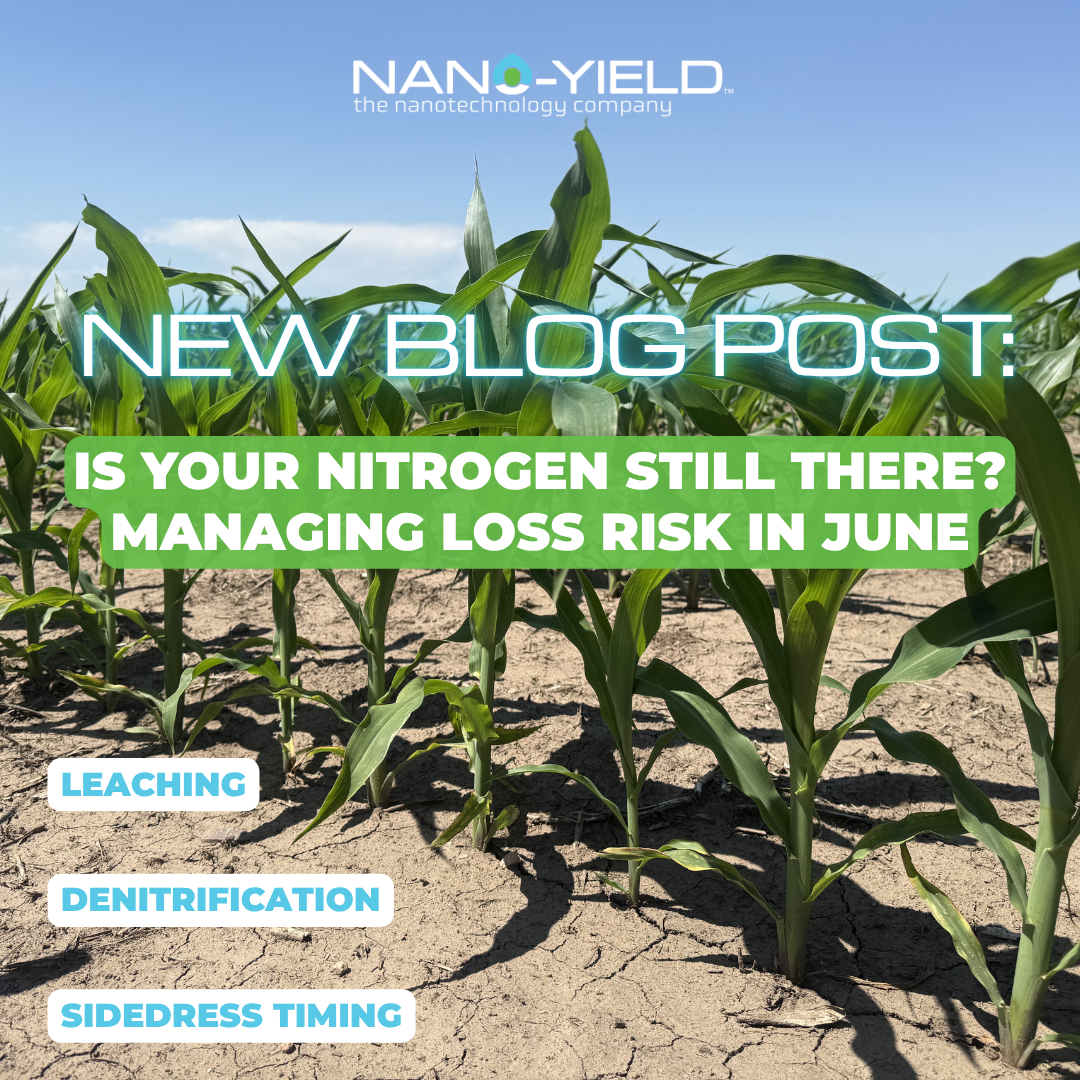
Is Your Nitrogen Still There? Managing Loss Risk in June
You Paid for It But Is It Still in the Field?
By the time June rolls around, a lot can happen to your nitrogen. You may have applied it weeks or even months earlier, but that doesn’t guarantee it’s still available to your crop.
Warm temperatures, heavy rains, and rapid plant growth all increase the risk of nitrogen loss. The question isn’t just how much you applied, it’s how much is still there when the crop needs it most.
The Two Biggest Ways Nitrogen Disappears
Nitrogen loss mainly comes down to two things: leaching and denitrification.
Leaching happens when excess rainfall moves nitrogen, especially nitrate down through the soil profile and out of the root zone. Once it’s gone, your crop can’t reach it.
Denitrification occurs when soils stay saturated. In these conditions, microbes convert nitrogen into gases that escape into the atmosphere. Warm, wet soils in June can accelerate this process quickly.
If you’ve had heavy rains or saturated conditions, there’s a good chance some of your nitrogen has already been lost.
Why June Is a Critical Window
June is when your crop really starts to ramp up nitrogen demand. Rapid vegetative growth means the plant is pulling nutrients fast, and nitrogen is at the center of that process.
If nitrogen isn’t available during this window, you’re limiting yield potential before the crop even reaches reproductive stages.
That’s why timing matters. Having nitrogen present early is important but having it available in June is critical.
Signs You Might Be Short on Nitrogen
Nitrogen loss isn’t always obvious right away, but there are a few signs to watch for:
- Pale or yellowing lower leaves
- Uneven growth across the field
- Slower-than-expected development
By the time you see visual symptoms, some yield potential may already be gone. That’s why proactive management is key.
Sidedress Timing Can Make the Difference
Sidedressing nitrogen gives you a chance to adjust based on current conditions rather than relying entirely on early-season applications.
It allows you to:
- Replace nitrogen that may have been lost
- Match application timing closer to crop demand
- Improve overall nitrogen use efficiency
In years with heavy spring rainfall, sidedress becomes even more important. It’s your opportunity to protect yield and make sure the crop has what it needs during peak uptake.
Protecting Your Nitrogen Investment
Nitrogen is one of your biggest input costs. Losing it to weather and soil conditions is more than frustrating, it directly impacts your bottom line.
Managing loss risk comes down to a few key principles:
- Be aware of weather patterns and soil conditions
- Don’t assume early-applied nitrogen is still available
- Use sidedress or supplemental applications when needed
Even small adjustments can help you recover lost efficiency and maintain yield potential.
Stay Ahead of Loss, Not Behind It
Nitrogen management is a season-long process.
By June, it’s worth asking the question: is your nitrogen still working for you, or has some of it already slipped away?
Taking a proactive approach now can help ensure your crop has the nutrients it needs when it matters most and that you’re getting the full value out of every pound you applied.
Have a question or want to learn more? Fill out the form below: