
Nano-Yield Market Update: Pricing Trends, Value Proposition, and What Growers Should Know in 2026
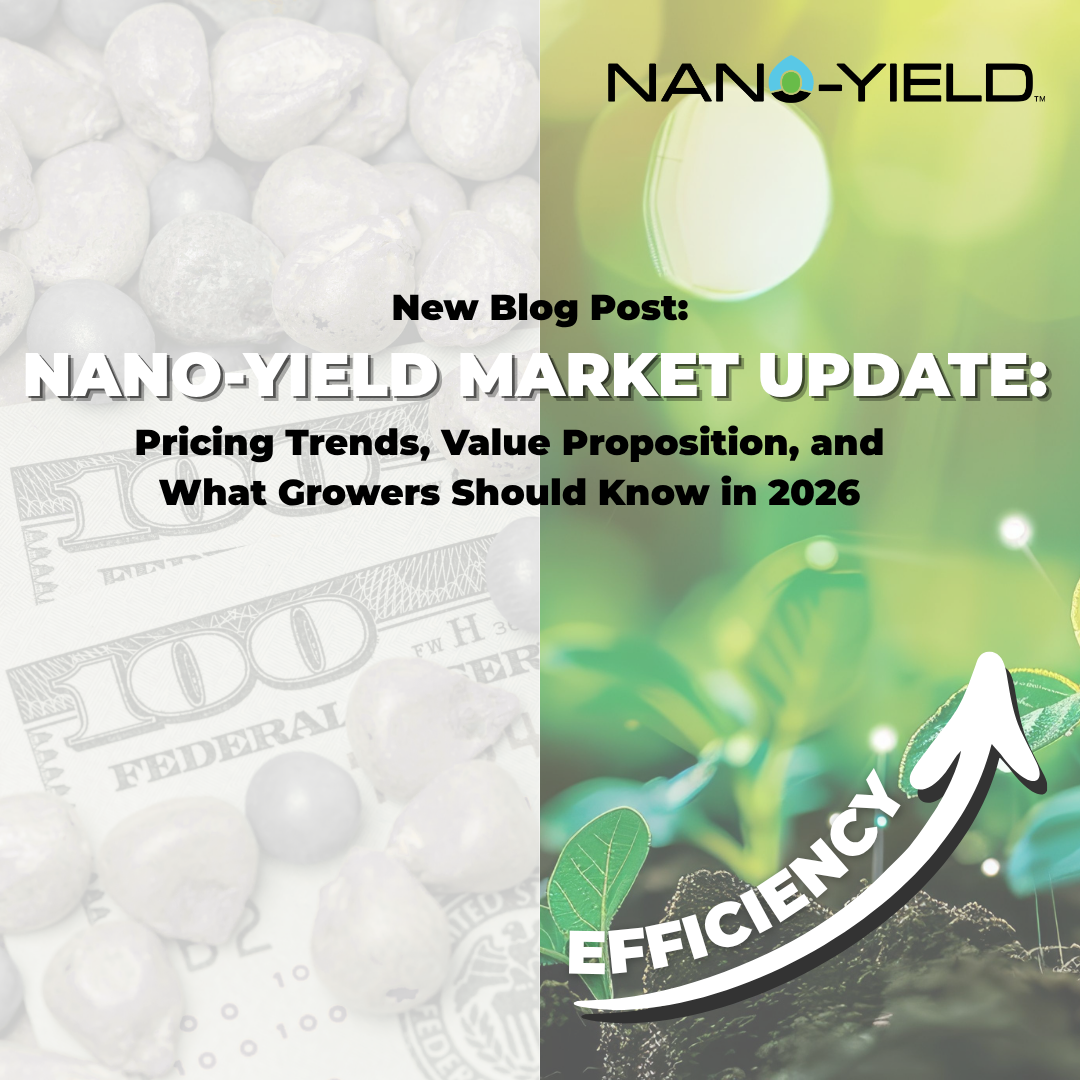
Nano-Yield Market Update: Pricing Trends, Value Proposition, and What Growers Should Know in 2026
In 2026, farmers and input buyers are watching every dollar spent in the crop input aisle more closely than ever. With fertilizer, crop protection, and fuel costs stubbornly high, the pressure is on to make smart choices without overpaying — especially when margins are thin.
While Nano-Yield doesn’t list real-time pricing publicly like a grain or fertilizer commodity, it does sit at the intersection of two powerful trends shaping agricultural input economics today:
1. Nanotechnology Isn’t a Fad — It’s a Growing Market
Nanotechnology in agriculture — including nutrient delivery platforms like those developed by Nano-Yield — is part of a rapidly expanding nano agricultural input market expected to grow significantly over the next decade. Industry analyses forecast the global nano fertilizers market alone to be worth multiple billions of dollars by the early 2030s.
What that means for pricing:
- As adoption grows,
economies of scale may put downward pressure on unit costs over time.
- Investors and input suppliers are increasingly interested in nanotech because of its efficiency advantages — which can justify
premium pricing based on results rather than cost alone.
2. Efficiency Drives Value, Not Just a Price Tag
Nano-Yield positions its products — such as NanoPro, NanoN+, and NanoCote™ — as tools that deliver more from every input dollar spent. Rather than competing on discounted pricing, the value conversation centers on:
- Getting
better nutrient uptake per pound applied
- Reducing waste and inefficiencies (e.g., dust loss with coated fertilizers)
- Increasing return on investment per acre
This value-focused pricing model means growers aren’t just buying a product — they’re buying net return per acre improvements.
3. Real Market Forces Still Shape How Farmers Buy
Although individual product prices aren’t publicly visible like a commodity price feed, broader macro trends influence how Nano-Yield and similar technologies are priced:
- Higher fertilizer and herbicide costs
have increased interest in efficiency enhancers.
- Higher demand from international markets and partnerships (e.g., with Agroenzymas) can affect supply chain costs and distribution footprint.
- Adoption in places like Latin America, India, and Europe can help stabilize pricing by spreading fixed costs across larger volumes.
4. What Growers Should Expect in Pricing Conversations
For growers and agronomy buyers evaluating Nano-Yield products, here’s a practical way to think about pricing in 2026:
- Focus on cost per acre, not cost per gallon/liter:
Because Nano-Yield products aim to improve efficiency, the real metric is ROI on a per-acre basis, not the sticker price. - Compare total cost vs. expected benefit:
If a product improves nutrient uptake or protects yield better than alternatives, its value may exceed its upfront cost. - Talk with dealers:
Since Nano-Yield doesn’t publish retail list prices, your local dealer or distributor will provide the actual cost for your region, crop, and program needs.
Bottom Line
There isn’t a single “market price” you can point to for Nano-Yield products like you can with grains or fertilizer. However, the broader market context — rising demand for nano-enabled efficiency solutions, global growth projections, and real on-farm ROI considerations — gives a clear picture:
Nano-Yield products are priced not just on cost, but on their ability to reduce overall input waste and increase net return per acre. That’s the real price story for growers in 2026.
Have a question or want to learn more? Fill out the form below: