
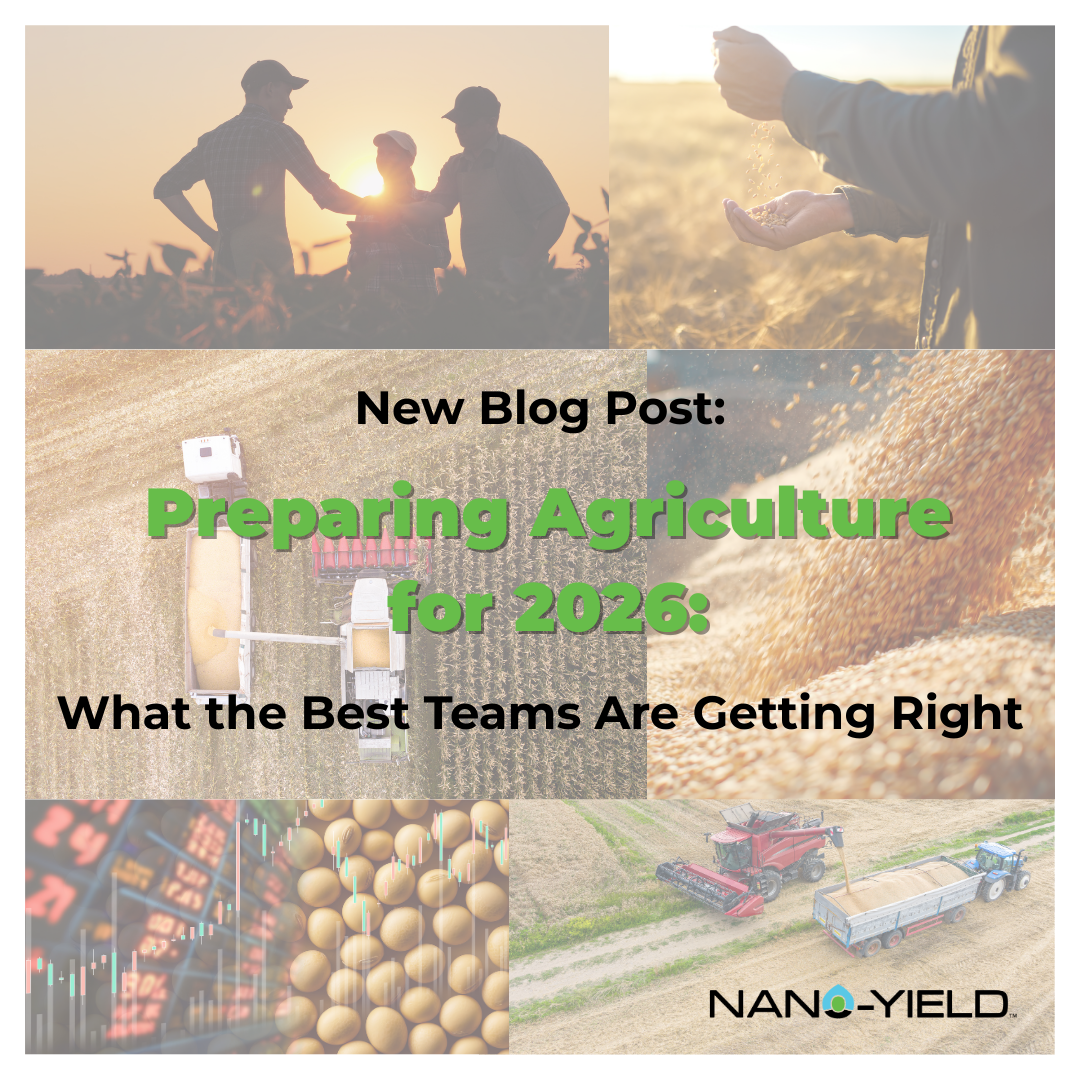
Preparing Agriculture for 2026: What the Best Teams Are Getting Right
As 2025 comes to a close, it’s clear this past year tested nearly every corner of agriculture. Volatile markets, rising costs, regulatory pressure, and rapid innovation forced agribusiness leaders to make tough decisions—often with imperfect information. Yet despite the challenges, there’s a strong sense of optimism heading into 2026.
In the final edition of Upstream Ag Insights for 2025, a few clear themes emerged: preparation, execution, and innovation will separate the teams that win in the coming year from those that struggle to keep up.
What the Most Prepared Teams Have in Common
According to Upstream’s Commercial Corner analysis, the organizations best positioned for 2026 aren’t doing more—they’re doing the fundamentals better.
First, they are clear on why they run trials. The most effective teams design trials with a defined purpose from the start, whether that’s proving performance, improving farmer experience, validating positioning, or supporting stewardship goals. Clarity upfront leads to better decisions downstream.
Second, they actually use their data. Instead of scattered spreadsheets and disconnected reports, prepared teams structure data so it can be compared across regions and seasons. When data is organized, patterns become visible—and actionable.
Third, they execute consistently. Winning teams have the people, processes, and systems to deliver results across regions, not just in isolated pockets. Consistency builds credibility internally and externally.
Finally, they operate as a connected system. Agronomy, sales, marketing, and decision-making work together rather than in silos. Alignment turns good ideas into real-world impact.
These fundamentals give teams confidence as they head into a new season—and reduce uncertainty in an already unpredictable industry.
Innovation Continues to Accelerate
Beyond execution, the December edition highlighted how innovation across agriculture is speeding up—not slowing down.
Major partnerships like Corteva’s joint venture with Hexagon Bio signal growing investment in nature-inspired and biological solutions. GROWMARK’s expansion into biological manufacturing shows how retailers and cooperatives are vertically integrating to meet future demand. Meanwhile, BASF and ADAMA’s collaboration on a novel fungicide mode of action reflects the industry’s push to stay ahead of resistance and regulatory challenges.
At the same time, innovation isn’t only happening at the molecule or manufacturing level—it’s also happening in how products work together in the field. Technologies that improve efficiency, compatibility, and return on investment are becoming increasingly important as growers look to do more with less.
This is where Nano-Yield fits into the broader innovation story. Nano-Yield’s platform approach is designed to enhance the performance of existing inputs—fertility, crop protection, biologicals, and biostimulants—by improving uptake and efficiency rather than adding complexity. As the industry shifts toward smarter systems and better resource use, solutions that help every input work harder align directly with where agriculture is headed.
Looking Ahead
The takeaway from Upstream’s final 2025 edition is clear: 2026 will reward teams that combine strong fundamentals with openness to new ideas. Clear trial objectives, usable data, reliable execution, and connected teams form the foundation. Strategic partnerships, biological innovation, and efficiency-driven technologies like Nano-Yield build on top of it.
Agriculture will always involve uncertainty—but the best-prepared organizations are learning how to manage it profitably. As the industry turns the page to 2026, those lessons may matter more than ever.
Have a question or want to learn more? Fill out the form below: