
Nano-Yield Marketing • May 14, 2024

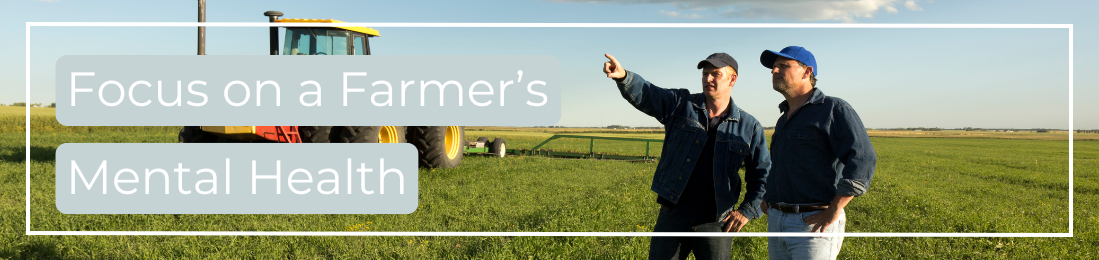
Farming often carries a heavy burden of stress and isolation. Studies consistently reveal that farmer suicide rates are alarmingly higher, ranging from 2 to 5 times the national average. Farmers face unique challenges—from natural disasters to financial uncertainties— all taking a toll on their mental health. It's time to stop the stigma surrounding mental wellness in agriculture and extend a hand to those who need support. After all, the future of agriculture depends on the well-being of its stewards.


Why Farmers are at Risk:

In rural communities, the taboo to start a conversation around mental health stifles and prevents those in need from seeking help. There's a common misconception that admitting to struggles is a sign of weakness, rather than a testament to human resilience. The pressures of financial instability, unpredictable weather, and the relentless demands of farming increases stress levels. When left unaddressed, this chronic stress can spiral into depression, enveloping individuals who contribute so much to our society.


Signs Someone May Be Struggling:

Recognizing the signs of mental health challenges is crucial for intervention. Changes in  their behavior, withdrawal from their social interactions, increased accidents on the farm, neglect of animals, and a decline in personal appearance or farm upkeep can all indicate someone is struggling. By staying vigilant and observant, we can extend a helping hand to those in need.


Ways to Take Action:

It's not enough to encourage struggling farmers to seek help; we must also empower their loved ones to initiate conversations about mental health. Simple gestures like regular check-ins, offering assistance with farm tasks, or providing a listening ear can make a world of difference. These small acts of compassion can break through the walls of isolation and offer a glimmer of hope.


Breaking the Stigma:

Invite ways to have open dialogue and foster conversations about mental health within your farming communities. We can challenge misconceptions

and pave the way for acceptance and support. As James Dixon of the Arkansas Farm Bureau aptly stated, “seeking help is an act of strength, not weakness”. It is this act of strength that saved his own life. Let's redefine resilience as the courage to ask for help when it's needed most.


Conclusion:

Together, we have the power to transform farming culture into one that prioritizes mental wellness. Let's remain vigilant for signs of distress among our friends, families, and colleagues and have the courage to speak up. By extending compassion and support, we sow the seeds for a healthier, more resilient agricultural community.


Resources for Help:

National Suicide & Crisis Lifeline: 1-800-273-8255 / www.988lifeline.org

Farm Family Wellness Alliance: www.farmfoundation.org/resources/farm-family-wellness-alliance/

AgriStress Helpline: 833-897-2474 (call or text) / www.agrisafe.org/agristress-helpline/

Anxiety and Depression Association of America: www.adaa.org


Sourced Site: https://www.fb.org/initiative/farm-state-of-mind


Have a question or want to learn more?  Fill out the form below:
By Sydney Tisthammer July 28, 2026
5 Ways Nanotechnology Is Transforming Crop Nutrient Delivery
By Sydney Tisthammer July 21, 2026
Nano-Yield® Leaders Named EY Entrepreneur Of The Year® 2026 Mountain West Finalists
New Formulation Specialist - Kyle Rallison
By Brooke Rosqvist July 15, 2026
welcome New Formulation Specialist - Kyle Rallison
By Marketing July 8, 2026
Nano-Yield® would like to congratulate Joel Mahin on his recent promotion to Director of Central Region Sales. Joel’s extensive background in agriculture has given him the valuable knowledge that he brings to work every day. He has experience in production, retail, distribution, agronomy, product development, and sales. As he completes his third sales season at Nano-Yield®, Joel continues to exceed expectations and contribute to the overall growth and success of his distributors, dealers, and growers. Joel started at Nano-Yield® as a Regional Sales Manager, covering Nebraska, Kansas, and Oklahoma. While these states remain part of his territory, Joel is now stepping into the role of Director of Central Region Sales. He will serve as a manager to Regional Sales Managers who cover the Iowa, Illinois, Missouri, and Arkansas regions. Joel said that bringing affordable products that work to the market is what motivates him every day. He wants to help growers succeed while contributing to the growth of his distributors and dealers. Joel hopes to pass on his knowledge and view of the business to the next generation. He said that the thing he enjoys the most about working for Nano-Yield® is the family atmosphere. When asked about his new role, Joel said the following: “I relish the challenge. I’m not done growing in Kansas, Nebraska, and Oklahoma. I want to take the model that I started in those three states and spread it to the other areas. There’s still room to grow — we’re not done yet.” Joel is known for his positive attitude, contagious energy, and ability to motivate others around him. When Joel is around, his peers know it’s going to be a fun and successful day. Mark Mitchell, Nano-Yield® Director of Sales U.S., said, “Joel earned this promotion through hard work, excellent sales numbers, and his team respects him and they trust him.” He added that Joel truly cares about his customers. He is a great team player, works well with others, and knows how to get the most out of his team. He’s selfless and all about Nano-Yield®. Landon Bunderson, Nano-Yield® CSO, said, “Joel always leads by example. He sets the tone for how to treat a customer and how to be successful.” We look forward to seeing what Joel accomplishes in his new role and are excited for the years to come. From everyone at Nano-Yield®, congratulations, Joel!
By Sydney Tisthammer June 29, 2026
Nano-Yield® Continues Its International Expansion In Brazil
By Sydney Tisthammer June 24, 2026
Welcome to the Team: New Regional Sales Manager, Mike Braun
By Brooke Rosqvist June 16, 2026
Is Your Nitrogen Still There? Managing Loss Risk in June
By Brooke Rosqvist June 9, 2026
Canopy Closure: Why It Matters More Than You Think
More Posts