
Harvest Traffic and Soil Compaction: Hidden Yield Losses
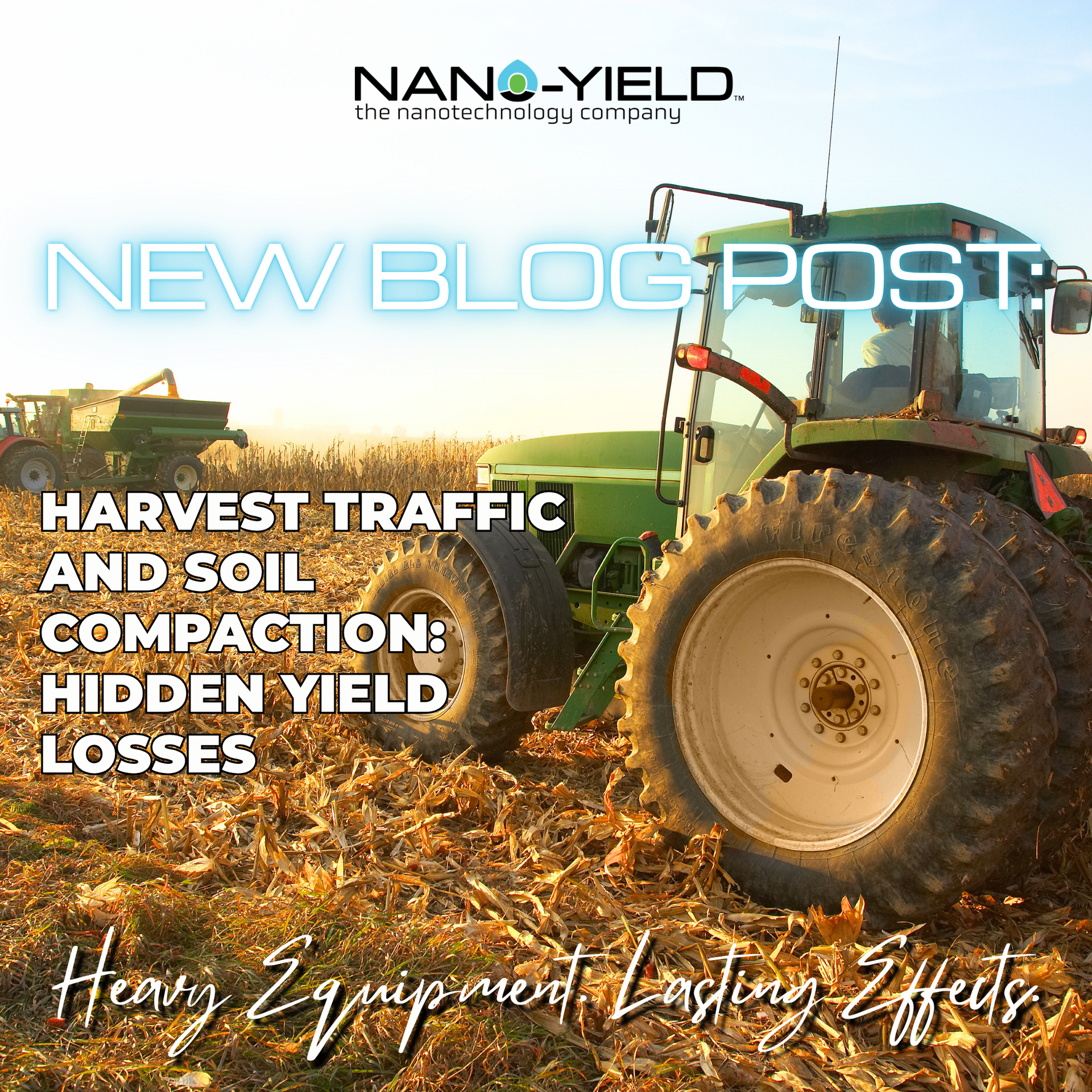
As harvest continues across regions of the United States, farmers have a lot of hope for their crops, and typically, some worries as well. “What will the yields be this year?” “Did that fungicide pass pay for itself?” And for many, soil compaction during harvest is among their concerns.
Most Vulnerable Soils to Compaction
Throughout the year, large equipment is necessary for jobs in the field, including discing, planting, spraying, and harvesting. As equipment size continues to increase, so does the weight it carries, which in turn can cause soil compaction. This occurrence can be detrimental to overall crop yield.
Soil compaction is a common problem that many growers face and is especially likely to occur when soils are wet. Soils with mostly clay and silt components are more prone to compaction than those that are mostly sandy.
Soil compaction happens when soil particles are squeezed together, which reduces pore space between them.
The Negative Impacts We Can’t See
There are many negative impacts from soil compaction that we can’t see. Below the surface is where the real damage is done.
- Nutrient Uptake: Denitrification can occur as a result of soil compaction.
- Root Growth: In years with minimal rainfall, soil compaction can result in stunted, drought-stressed plants because of decreased root growth.
- Soil Density: Soil density increases due to soil compaction.
- Deficiencies: Nitrogen and potassium deficiencies become more common when plant growth is restricted due to compaction.
- Water Filtration: Compaction can lead to decreased water filtration and drainage. This can sometimes lead to aeration-related issues, making it more difficult for crop roots to function properly.
Reducing Compaction & Increasing Yields
Reducing compaction is no easy feat. To put it simply, try to avoid driving on the field until absolutely necessary.
- Make a Path: During harvest, create a designated path for machinery to drive on to reduce the number of passes over each area of the field.
- Lessen the Load: Try not to fill trailers to the brim. This will help keep the weight of equipment to a minimum.
- Mindful Tilling: Adjust the amount of tillage on your acres depending on their level of compaction.
NanoCote® to the Rescue
Do you have damaged soil structures that need a little extra love? Look no further than NanoCote. This product is a dry fertilizer coating that…
- Provides a 3:1 ROI
- Increases soil dispersion of nutrients
- Enhances nutrient use efficiency
- Improves plant uptake of agricultural inputs
- Increases yields by 10–25%
- Reduces dust by up to 99%
Healthy soils create healthy crops. Use NanoCote to help combat the negative effects of soil compaction. Efficiency pays!
Have a question or want to learn more? Fill out the form below: